
If someone in your home sneezes all spring, or your dog sheds enough to knit a second dog, it is natural to wonder whether the ducts are part of the problem. Plenty of duct cleaning ads say they are, and promise easier breathing once the ducts are clean. Before you pay for that promise, it helps to know what the evidence does and doesn't show.
A quick note on who we are: Reno Air Duct Cleaning doesn't do the work ourselves. We connect Reno-area homeowners with independent local duct cleaning and HVAC companies for free, no-obligation quotes. We are not doctors either. If allergies, asthma or any other symptom is a concern, talk to your doctor; that conversation should come before any decision about your ducts.
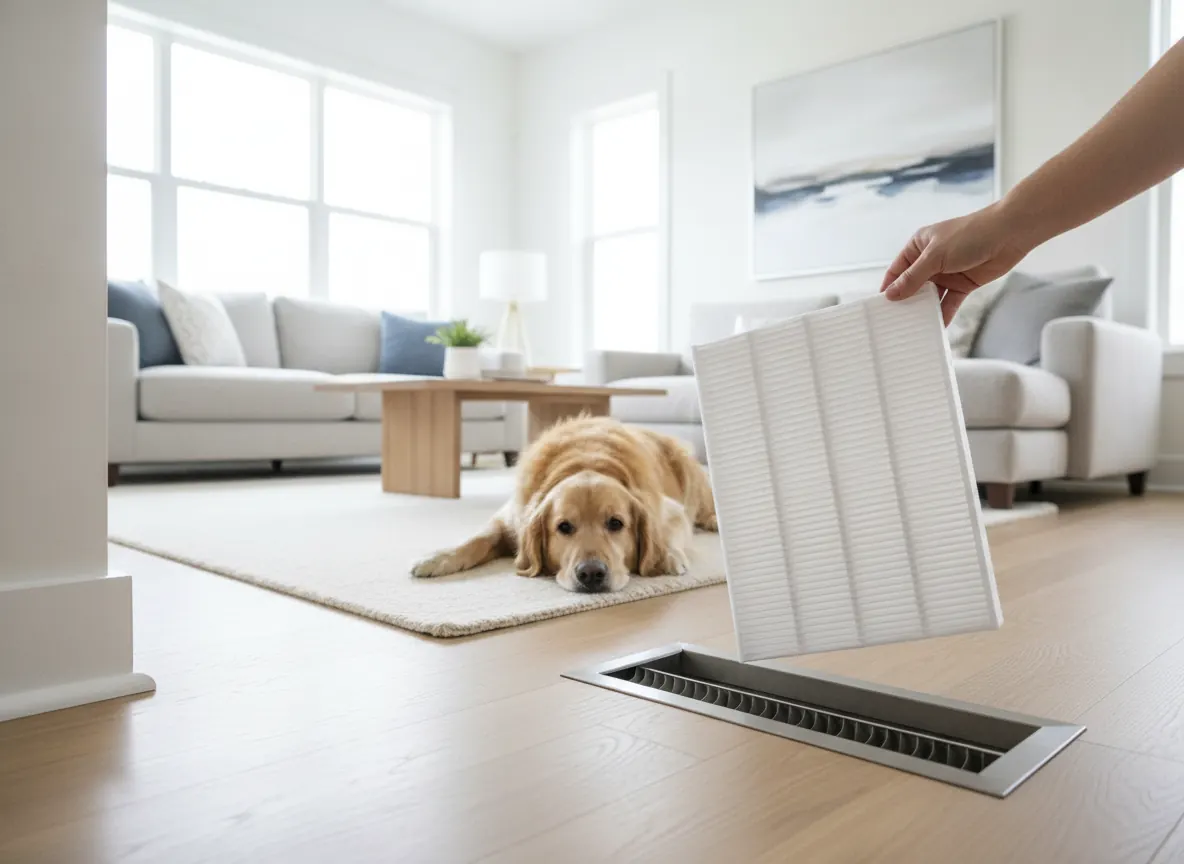
What EPA says about duct cleaning and health
The U.S. Environmental Protection Agency's page "Should You Have the Air Ducts in Your Home Cleaned?" (updated February 19, 2026) is the most widely cited source on this, and it is direct:
"Duct cleaning has never been shown to actually prevent health problems. Neither do studies conclusively demonstrate that particle (e.g., dust) levels in homes increase because of dirty air ducts or go down after cleaning."
EPA goes further on household dust: "there is no evidence that a light amount of household dust or other particulate matter in air ducts poses any risk to health." And it tells homeowners plainly: "Do not hire duct cleaners who make sweeping claims about the health benefits of duct cleaning — such claims are unsubstantiated."
So if a company tells you a cleaning will cure allergies, ease asthma or stop your kids from getting sick, that is exactly the kind of claim EPA says to walk away from. Nobody can honestly promise allergy or asthma relief from a duct cleaning.
Does air duct cleaning reduce dust?
This is one of the most searched questions, and the EPA line above is the answer: studies don't conclusively show that dust levels in a home go down after the ducts are cleaned. Much of the dust you see on furniture comes from everyday life: people, pets, fabrics and whatever blows in through doors and windows.
That is especially true in the high desert. Reno averages only about 7.35 inches of rain a year (NOAA 1991–2020 normals), summer afternoon humidity runs around 20%, and the afternoon "Washoe Zephyr" wind and spring wind season move a lot of dust around. A clean duct system won't change the weather outside.
EPA also notes that some dust in the system is normal: "It is normal for the return registers to get dusty." A gray film on the return grille is not, by itself, a reason to clean the whole system.
When cleaning does make sense
EPA recommends cleaning "on an as-needed basis" and names three situations where you should consider it:
- "There is substantial visible mold growth inside hard surface (e.g., sheet metal) ducts or on other components of your heating and cooling system."
- "Ducts are infested with vermin, e.g. (rodents or insects)."
- "Ducts are clogged with excessive amounts of dust and debris and/or particles are actually released into the home from your supply registers."
Pets can contribute to that third situation. Heavy hair and debris packed into returns, or clumps visibly coming out of supply registers, is the kind of buildup EPA is describing. In that case a proper source-removal cleaning is a reasonable thing to price out. Our guide to NADCA source removal explains what a real cleaning involves.
EPA also frames the "probably unnecessary" case this way: "If no one in your household suffers from allergies or unexplained symptoms or illnesses and if, after a visual inspection of the inside of the ducts, you see no indication that your air ducts are contaminated with large deposits of dust or mold (no musty odor or visible mold growth), having your air ducts cleaned is probably unnecessary." Note what that sentence does and doesn't say. It doesn't say cleaning helps allergies. It says that when no one has symptoms and the ducts look fine, cleaning is probably unnecessary.
What NADCA says about pets and allergies
The National Air Duct Cleaners Association, the industry's trade group, doesn't set a fixed cleaning schedule. Its consumer FAQ says frequency "depends on several factors, not the least of which is the preference of the homeowner." Among the reasons it lists for cleaning more often are "pets that shed high amounts of hair and dander" and "residents with allergies or asthma," along with smoking, water damage, remodeling and moving into a new home.
Keep in mind that NADCA represents duct cleaning companies, while EPA is the federal regulator. NADCA lists these as reasons homeowners choose to clean more often; it is not the same as evidence that cleaning improves symptoms. For more on timing, see how often should you clean your air ducts?
What to try first
Before you spend a few hundred dollars on the ducts, these steps cost less and are within your control. None of them is a medical treatment; they are simple housekeeping for the system.
- Change the furnace filter on schedule. Pet households often find filters load up faster. Check it monthly and replace it when it looks dirty.
- Ask about a higher-rated filter. EPA's wildfire guidance suggests a MERV 13 filter "or as high a rating as your system fan and filter slot can accommodate," and notes you may need an HVAC technician to tell you what your system can handle. The same question is worth asking for a pet home, since not every system can take a denser filter.
- Vacuum the registers and returns. A vacuum with a brush attachment handles the grilles. EPA suggests a HEPA-type vacuum when cleaning up fine dust such as ash.
- Groom pets and wash bedding regularly. Less loose hair in the house means less for the returns to pull in.
- Look inside a register. Pull a supply grille and shine a flashlight in. If you see packed debris, mold or signs of rodents, that's when EPA says to consider a cleaning.
Be careful with sanitizers and "allergy treatments"
Some companies pitch a fogged sanitizer or deodorizer as an allergy or pet-odor add-on, typically $100–$250 if it isn't included (Bob Vila estimate). Whether to ask about one is your call, but EPA's cautions are worth reading first, especially if anyone in the home is sensitive to chemicals. EPA says "research has not demonstrated their effectiveness in duct cleaning or their potential adverse health effects," and that "no chemical biocides are currently registered by EPA for use in internally-insulated air duct systems." It also notes that ozone "is a highly reactive gas that is regulated in the outside air as a lung irritant."
If you do allow a treatment, EPA says the provider should show you the label, use it only after a full cleaning, and apply it only to un-insulated parts of the system. NADCA adds that antimicrobials "are only recommended when there is a specific need to address microbial contamination." Be wary of anyone who presents a spray as an allergy cure.
If you decide to get a cleaning
EPA and NADCA put typical whole-system cleaning at about $450–$1,000; our cost guide has more ranges. EPA recommends talking to at least three providers, getting written estimates, and asking them "to show you the contamination that would justify having your ducts cleaned." Ask for the scope in writing, and check the company's license on the Nevada State Contractors Board search. Nevada requires contractors to show their license number in their ads.
When you are ready, request free quotes from independent companies that serve Reno, Sparks and nearby towns, or read more about air duct cleaning in Reno. Ask each one to show you what's actually in your ducts, and skip anyone who promises a health result.